Micromotor Product Site


Exporting to Europe, USA, and Asia.
Dealers available in North America, Europe, and Asia.
In this column, engineers from C.I. Takiron. share their expert knowledge on micromotors (coreless motors, brushless motors, and gearheads). We hope you find this information useful when selecting motors for a wide range of applications, including medical devices, industrial tools, and optical equipment.
This guide provides a detailed explanation of the technical considerations for motor selection, aimed at product development engineers and design professionals. It addresses common questions such as, “I don’t know which motor to choose,” and “I want to understand the difference between coreless and brushless motors.”
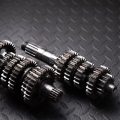
In the design of products powered by motors—such as industrial equipment, medical equipment, and optical equipment—the “gear reducer” is a critical component that determines performance. It is incorporated into many devices to achieve high torque output and precise positioning control that cannot be obtained from a motor alone. However, many design engineers likely have questions such as “What exactly is a gear reducer?”, “Which type should I choose?”, and “What are the optimal specifications for my product?” Selecting the wrong gear reducer can lead to risks such as operational failures due to insufficient torque, design changes caused by oversized units, and even a shortened lifespan for the product. In this article, we will explain the practical knowledge needed during the…
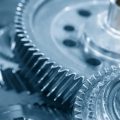
In the development of devices that use Micromotors or compact motors, “gearheads” are widely used to achieve the required rotational speed and torque. Also known as reduction gears, gearheads are gear mechanisms that connect to the motor’s output shaft to reduce rotational speed while increasing torque. In this article, we provide a detailed explanation—from the basics of gearheads to practical selection criteria—for engineers struggling with gearhead selection. Supervised by: C.I. TAKIRON Corporation Electronic Devices Sales Group This article has been supervised based on the advanced technical expertise and insights we have cultivated since our founding in 1919 as a leading company in plastic processing. Our department continuously analyzes market trends and the latest technologies in ultra-compact, high-precision micro motors,…
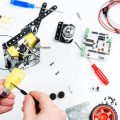
Motors are devices that convert electrical energy into mechanical energy, and they are essential components in the development of B2B products such as medical equipment, industrial robots, and optical equipment. However, many developers likely face technical challenges such as “Which motor is best suited for medical device applications?”, “Which type should be chosen to minimize vibration and noise?”, and “How can we achieve both miniaturization and high torque?” This article explains everything from the basic principle of motor operation to specific application examples by industry sector, as well as the optimal motor selection criteria for each application. We will also introduce, with real-world examples, how Coreless motors can solve challenges in the development of medical equipment and precision equipment, where…

A BLDC motor (Brushless DC Motors) is a motor that removes the brushes and commutator from a conventional Brushed DC motor and achieves rotation through electronic control. Due to characteristics such as long service life, low noise, and high energy efficiency, their adoption is expanding across a wide range of fields, including home appliances, Industrial equipment, and automotive components. On the other hand, there are several points to consider when implementing them, such as the need for a dedicated control circuit for operation. This article explains the basic structure and operating principles of BLDC motors, their differences from Brushed DC Motors, their advantages and considerations, and their typical applications. This information will serve as a useful reference when selecting a…
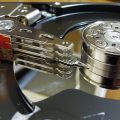
Actuators play a key role in moving machinery across a wide range of fields, including manufacturing, robotics, and medical equipment.The term “actuator” is a general term for devices that use energy sources such as electricity, hydraulics, or pneumatics to move moving parts. They are widely used in everyday scenarios, such as the opening and closing mechanisms of automatic doors and the joint drives of robotic arms. While the term “actuator” is used broadly, there are multiple types—including electric, pneumatic, and hydraulic—and their mechanisms and optimal operating ranges vary. This article provides a systematic explanation of actuators, covering everything from their basic definition and the mechanisms of each type to their typical applications. We also outline key selection criteria based on…
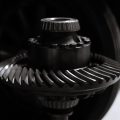
A geared motor is a drive unit that integrates a motor and a gearhead (reduction gear). Its key feature is the ability to achieve low-speed, high-torque output—which cannot be obtained from a motor alone—in a space-saving design.They are used across a wide range of industries, from large-scale equipment such as conveyors, food processing machinery, and industrial robots, to small precision devices like medical equipment, optical equipment, and electronic locks. Various types are available depending on the application, and selecting the right model to match the required performance and installation environment is key to ensuring stable operation. In this article, we will explain the basic mechanisms and structure of geared motors, the main types of gearheads, and key selection points to…

When performing motor selection, calculating torque is an essential step. Torque is a physical quantity that represents the magnitude of the force required to rotate an object around an axis. It is closely related to a motor’s output and rotational speed, and an incorrect calculation may prevent the equipment from operating properly. Conversely, selecting a motor with excessive specifications can lead to increased costs and space constraints, so caution is required. This article explains the basic definition of torque and the proper use of units, as well as how to apply the calculation formula “T = 9550 × P/N,” which uses output and rotational speed.We have compiled practical information ranging from the concepts of load torque and safety factors to…

“rated power” is a term that always appears in catalogs for motors and power supply equipment. While it is an important metric for product selection, surprisingly few people may fully understand the difference between rated power and maximum output or power consumption. rated power is a standard value indicating the output performance of the equipment guaranteed by the manufacturer. Selecting equipment without a proper understanding of this value can lead to problems such as failure due to overload, overheating, or failure to achieve the expected performance. Especially in product development involving compact motors, a proper understanding of rated power is the first step toward ensuring reliability. In this article, we will explain everything from the basic definition of rated power…

Many electrical issues in factories and offices—such as circuit breakers tripping suddenly or equipment shutting down—are caused by “overelectric current.” If left unaddressed, this can lead to serious accidents such as wiring damage or electrical fires. Particularly in facilities using industrial equipment or motors, equipment shutdowns caused by excessive electric current can affect the entire production line and potentially result in significant economic losses. For development engineers and facility managers, correctly understanding the causes of overelectric current and implementing appropriate countermeasures is essential for maintaining equipment safety and uptime. This article provides a comprehensive explanation of practical information, ranging from the basics of overcurrent to its causes and specific countermeasures. Supervised by: C.I. TAKIRON Corporation Electronic Devices Sales…

When using inductive loads such as motors and relays, the back emf generated the moment the electric current is interrupted can cause serious damage to power supplies and control circuits. Appropriate countermeasures against back emf are essential, particularly in fields that require high reliability, such as medical equipment and industrial equipment. By correctly understanding the principles behind back emf and grasping its specific effects on motors and power supplies, you can incorporate effective countermeasures from the design stage. To achieve safe and reliable product designs, let’s deepen our understanding of back emf. Supervised by: C.I. TAKIRON Corporation Electronic Devices Sales Group This article has been supervised based on the advanced technical expertise and insights we have cultivated since our…